24/7 Hour
-
-
-
Delhi • Gurugram • Ahmedabad
24/7 Hour
Delhi • Gurugram • Ahmedabad
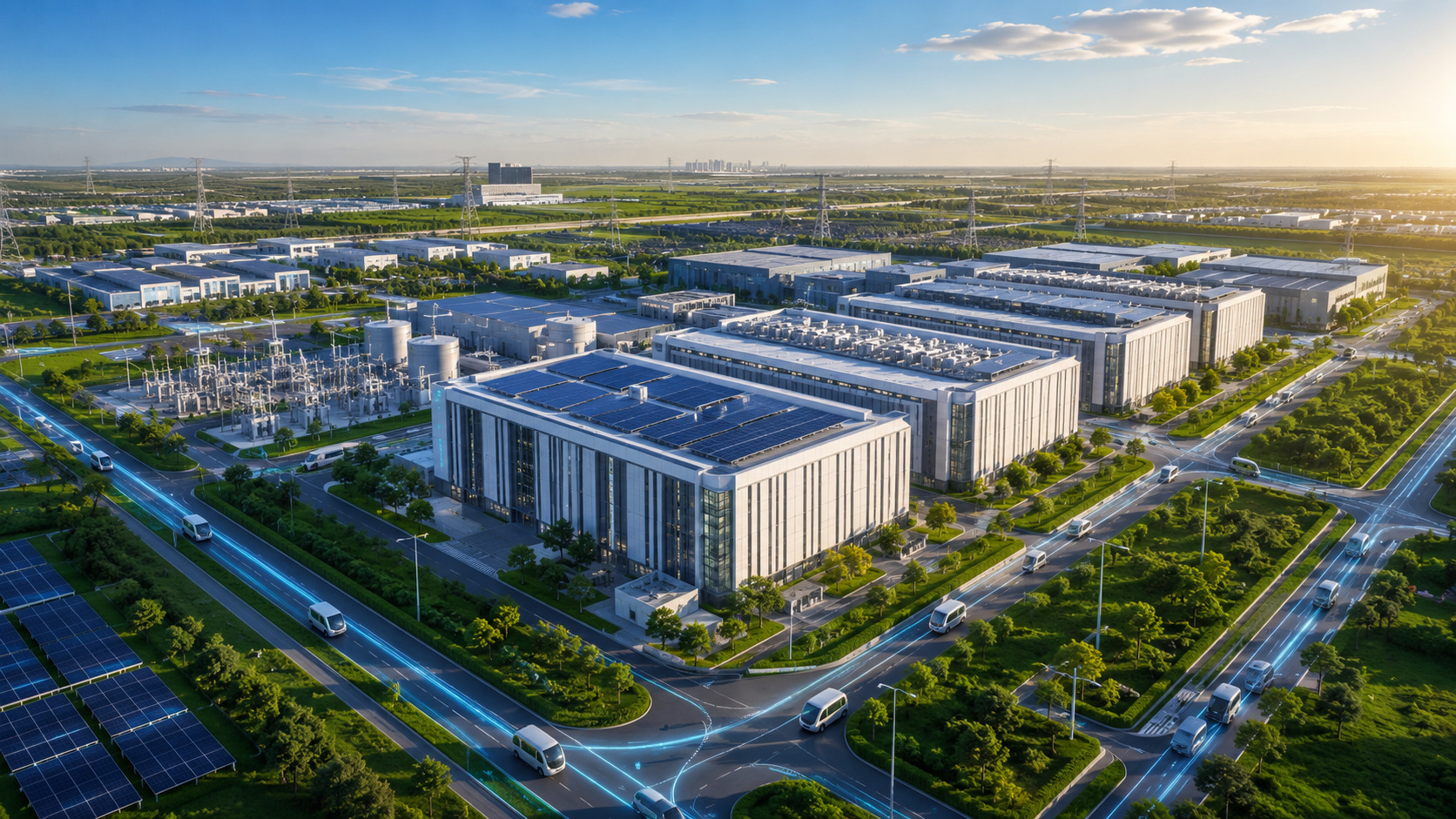
Data centers in Dholera Smart City are large-scale digital infrastructure facilities that power the city's smart grids, traffic systems, and industrial operations. The flagship project is a ₹25,000 crore, 250 MW Green AI Data Center Campus backed by the Gujarat government and L&T VYOMA—one of India's biggest single digital infrastructure investments to date.
We have been tracking the development of Dholera since the early stages of building roads and allocating land. This data centre announcement is the most significant change we've seen so far in the region's direction.
If you've been following Dholera Smart City even loosely, you've probably seen this headline pass through your feed. A ₹25,000 crore project is a big number, and those numbers are often mentioned in Indian infrastructure news without much real detail.
This one is different. It's backed by a signed Memorandum of Understanding, not a proposal still sitting in a planning committee. And it is built in a city that was created from the ground up to support such investments.
The following article walks through what the project actually involves, why Dholera was the right fit for it, and what it could mean if you're watching this region for land, business, or long-term investment.
It's a 250 MW Green AI-Ready Data Centre Campus planned for Dholera Special Investment Region (Dholera SIR).
The project approach is from a Memorandum of Understanding (MoU) signed between Gujarat's Department of Science and Technology and L&T VYOMA. The data centre is designed to support cloud computing, AI model processing, and enterprise-grade digital storage at hyperscale capacity. This kind of infrastructure powers everything from banking systems to logistics platforms to AI tools used across the country.
Total Investment
Power Capacity
Renewable-Integrated
Enterprise-Grade Storage
A 250 MW facility isn't a small server room tucked into an office basement. For context, that's enough capacity to support tens of thousands of high-performance computing racks running continuously. Facilities at this scale typically serve multiple large enterprise clients at once, not a single company's internal systems.
The name "Green AI" also has significance. The campus is designed to run on renewable-integrated power rather than pulling straight from a diesel-backed grid, which is still how many older Indian data centres operate. That distinction becomes more important every year as power costs and sustainability requirements both climb.
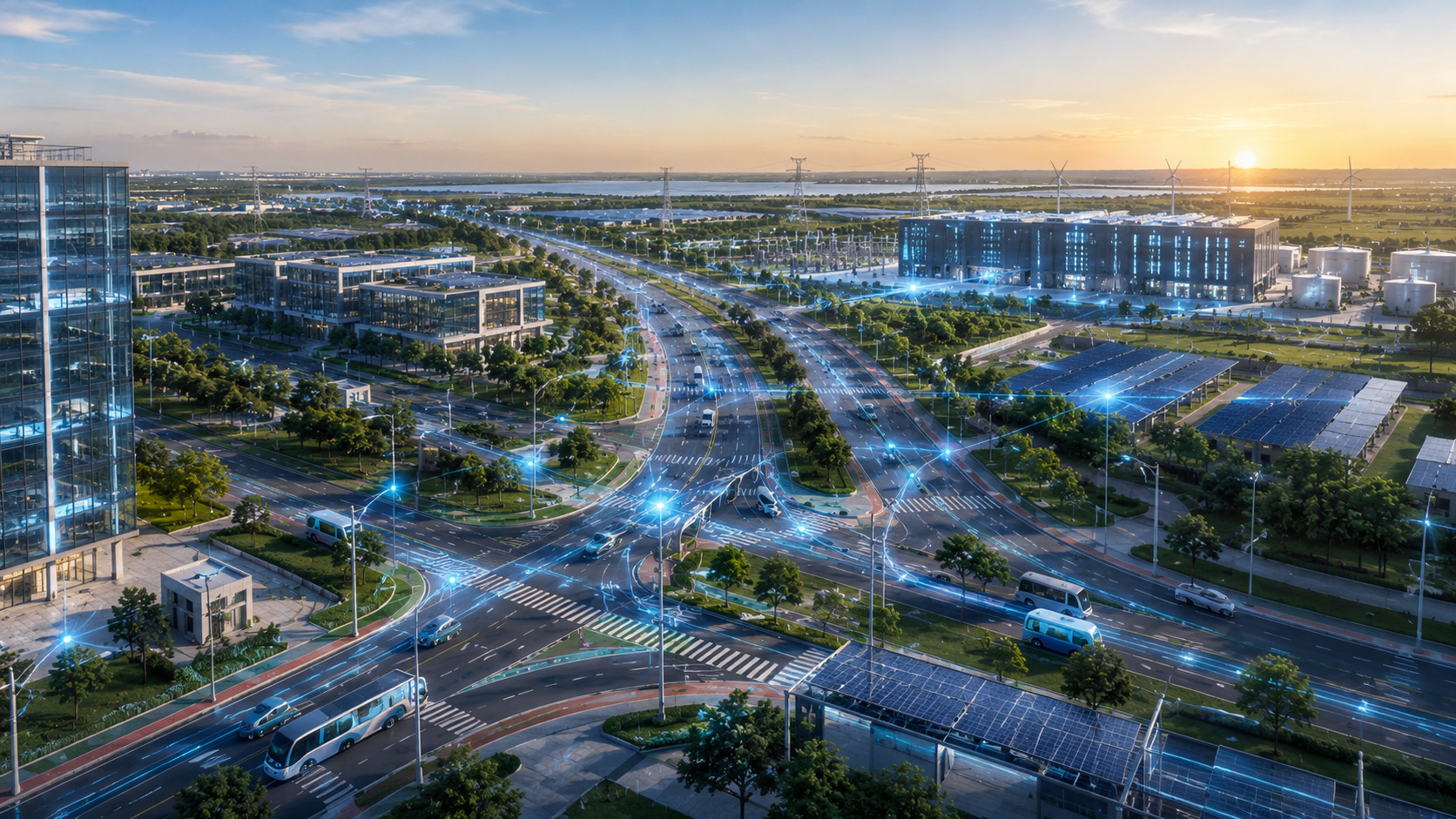
This is a perfect fit for Dholera as it was envisioned as a greenfield city from the start, and not an upgrade to an existing city.
On the surface, this doesn't appear to make a huge difference, but in essence, it is the main distinguishing factor. Cities such as Bengaluru, Pune, or Hyderabad developed their tech ecosystem based on decades-old infrastructure such as roads, power networks, and water supply which is ill-equipped to handle the demands of modern-day digital consumption of the vastly growing population.
The Dholera Special Investment Region managed to avoid the same fate since being one of the cities of the Delhi Mumbai Industrial Corridor (DMIC), all its infrastructures including power distribution, water supply, road networks, and digital connectivity were planned to fit the needs from the very beginning.
Imagine two industrial campuses. One is located in a city in which engineers have to plan in accordance with the pre-scheduled power cuts and unreliable fiber connectivity. The other is located in a city in which all these infrastructures have been sized to meet just these needs from the beginning. The investors would most likely choose the latter and so do they in Dholera.
The Dholera SIR covers approximately 920 square kilometers as per the development framework of the DMIC for this region. The size ensures that there is ample space available for infrastructure development without any space constraints that older cities may have.
While a data center is not just storage drives for data, but also the engine for processing that information and making sense out of it.
For instance, the traffic management in the city relies on the data collected by sensors placed all over the road network. This data is meaningless unless processed to come up with an actual decision – say to change traffic lights timing before there will be congestion on the streets. All this processing occurs in the data center.
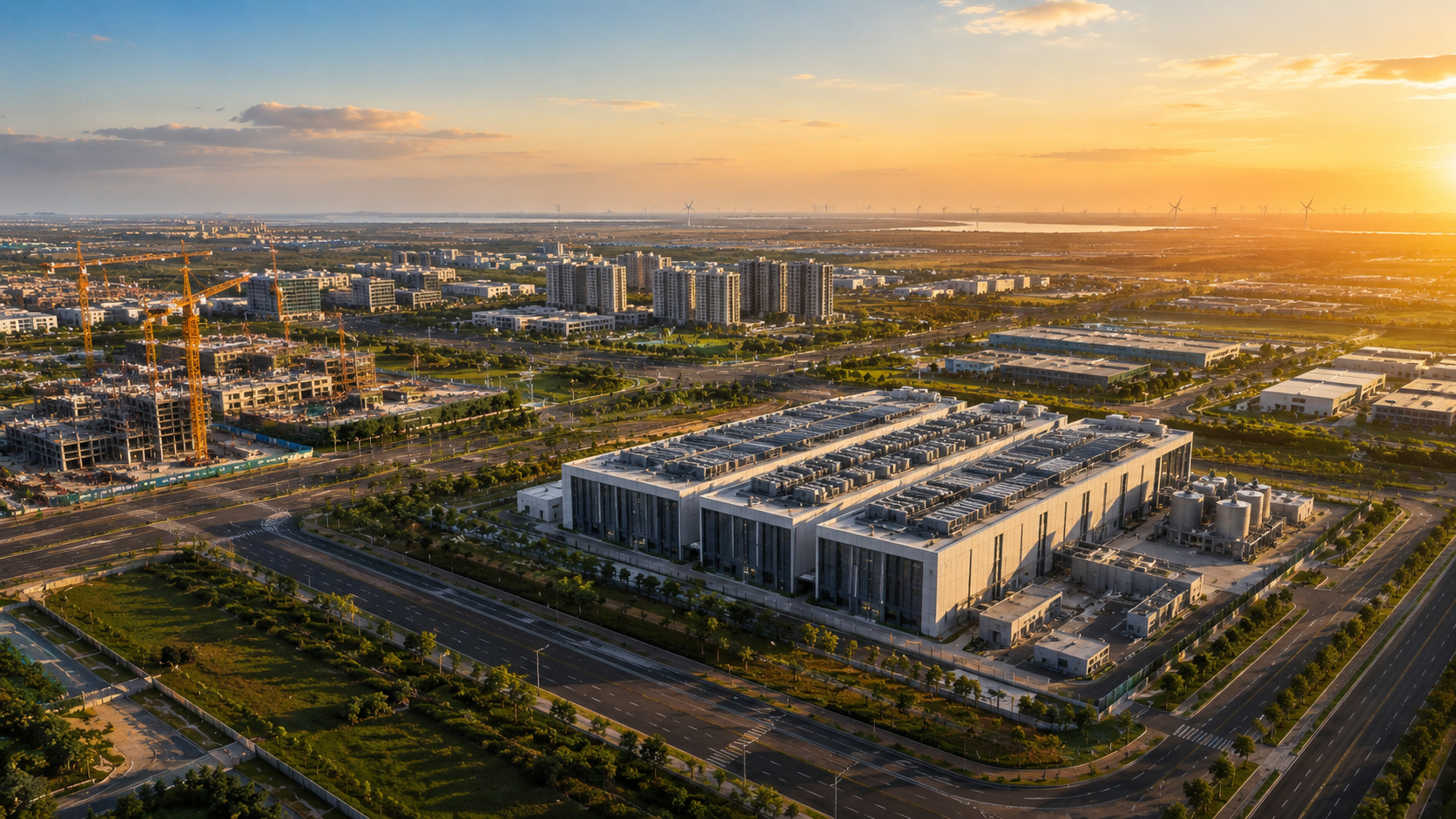
In virtually any other system in a smart city you can find the following chain of actions:
Remove the data center step from that chain, and the "smart" part of a smart city stops working. The sensors would be simply gathering some data which no one needs.
Most Indian cities plan infrastructure based on population estimates that are years out of date by the time construction wraps up. Dholera's planning authority works differently, using live data collected from digital systems already operating across the city.
As development occurs in new sectors and industrial zones develop, planners can monitor the trends in terms of demographics, traffic and utilities in real time. This is because predictive analysis allows for identifying the needs that will be created in the future before they become shortages.
This is especially crucial for a city growing as quickly as Dholera. The Government of Gujarat and DMIC development authorities can allocate resources based on what's actually happening on the ground, not projections made five years earlier that may no longer hold up.
Reliable power is the single biggest requirement for any hyperscale data centre, and it's also one of Dholera's clearest advantages.
Smart grids across the city continuously monitor electricity demand and shift load between zones in real time. That matters even more with renewable energy sources like solar in the mix, since output changes with weather and time of day. A grid that can't balance supply and demand dynamically ends up wasting volume or risking outages during peak load.
The "Green AI" framing on the new data centre campus reflects a real design choice, not just marketing language. Pairing heavy computing infrastructure with renewable-integrated power keeps the facility from straining the grid the way older, non-optimized data centres often do elsewhere in the country.
The same monitoring proposition extends to water and waste management. Systems track usage and flag faults early, which means fewer service interruptions and lower long-term maintenance costs across the region.
None of this digital infrastructure matters much without physical connectivity to match it, and Dholera has been closing that gap steadily.
The Ahmedabad–Dholera Expressway has greatly reduced travel time between the two cities, making it much easier to move workers, materials, and equipment between them on a daily basis. The Dholera International Airport is under active development, and freight and rail connectivity are part of the broader DMIC transportation plan.
Combined with real-time traffic data processed through local computing infrastructure, this connectivity directly supports industrial logistics. Moving raw materials in and finished goods out faster matters to every manufacturer, warehouse operator, and logistics company evaluating Dholera as a base of operations—and it's one more reason large investors are taking the region seriously.
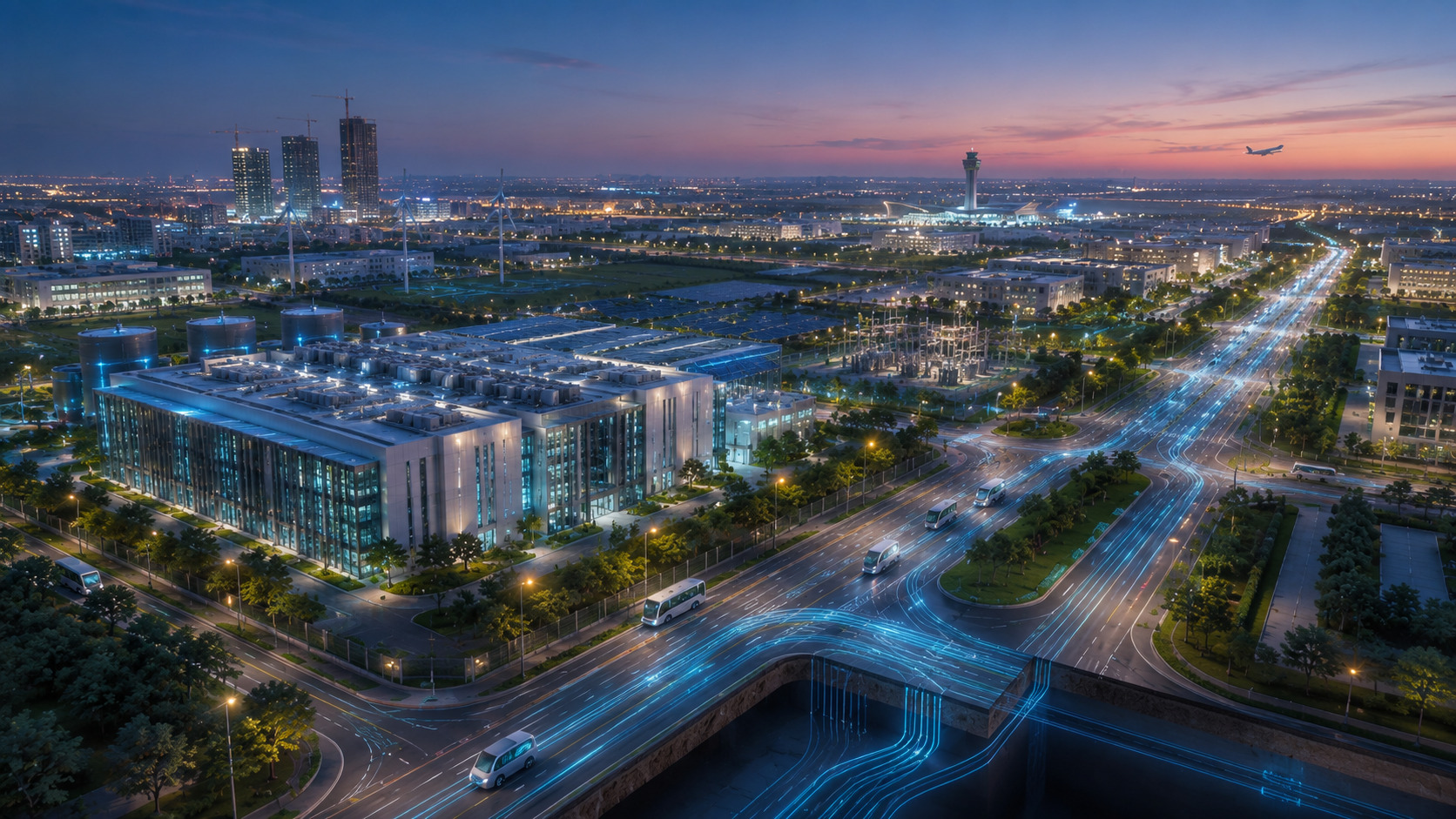
And here's the most important thing to keep in mind while considering Dholera as an investment option: infrastructure projects of this scale do not happen in isolation.
A ₹25,000 crore data center campus requires the arrival of laborers, engineers, and technicians right away. In just a few years, contractors, vendors, and other auxiliary businesses are drawn to the area as the project grows and remains in operation. All the major industrial corridors that have been established in India over the last twenty years went through the same process – the initial investment in infrastructure is followed by residential and commercial development soon after.
This is already happening in Dholera. The number of investors from NRIs and first time land buyers has increased substantially due to the news of new investments such as the data center, and these buyers are increasingly interested in land parcels in the Dholera SIR and Dholera Influence Zone.
Historical examples of developments linked to DMIC reveal that land demands increase in a two- to four-year period post-confirmation of any large-scale infrastructure investments. Every investment comes with its risks, and each buyer needs to evaluate their time horizon, risk appetite, and money accordingly. However, what is well-documented in all the success stories of the growth corridors of India is the sequence – infrastructure investment first and then the demand follows.
Get information on various plots at affordable prices from Vishall Landbase.
Explore Investment OpportunitiesA handful of areas are likely to show the clearest impact from Dholera's growing digital backbone over the next few years.
Industrial research and development may see the biggest long-term payoff. As data infrastructure matures, startups and research institutions gain access to open data tools that let them build new services on top of the city's existing digital systems — the same pattern that's driven innovation clusters in established tech hubs elsewhere.
Dholera Special Investment Region (Dholera SIR) is India's first planned greenfield smart city, spread across roughly 920 square kilometers in Gujarat. It is a key part of the Delhi Mumbai Industrial Corridor (DMIC) and brings together industrial, residential, commercial, and logistics areas within one master-planned region.
Major anchors already underway include the incoming 250 MW Green AI Data Centre Campus, the Dholera International Airport, semiconductor manufacturing investment, and renewable energy infrastructure — all connected through the same digital and physical backbone built into the city from the start. Together, these projects position data centres in Dholera Smart City as a core piece of India's next phase of digital and industrial growth.
It is a 250 MW Green AI-Ready Data Centre Campus planned for Dholera SIR, confirmed by a Memorandum of Understanding between Gujarat's Department of Science and Technology and L&T VYOMA. This facility will support cloud computing, AI processing, and large-scale enterprise digital infrastructure.
Data centres in Dholera Smart City are more than a single infrastructure headline. They're the processing backbone behind everything the city is trying to become — a place where power, transportation, governance, and industry all run on real-time data instead of outdated estimates.
The ₹25,000 crore Green AI Data Centre Campus is the clearest proof yet that global-scale investors see Dholera as ready for that role. For anyone tracking the region, whether for business operations or land investment, this project is worth watching closely over the next few years.
Get information on various plots at affordable prices from Vishall Landbase.
Contact Us Today